Glimpse of Royal Weeding of Sikkim


A guest drinking CHANG, a millet beer served in bamboo mugs, at a reception organized by the groom's sisters after the wedding.

The Royal couple being greeted by the Commoners

Hope Cooke dancing with her stepson Tenzing Namgyal


Photographer Marilyn Silverstone at wedding of Crown Prince of Sikkim

The Royal Weeding in its process

Sikkimese Bhutia dancers at the wedding festivities


Tsuklakhang Royal Palace. March 20th, 1963. Guests arriving at the wedding with gifts.


Hope Cooke being prepared for the marriage ceremony

The Royal Couple 

Tsuklakhang Royal Palace. The Maharaja Tashi Namgyal (70), head of State of Sikkim, sits on a 5 foot throne during the wedding.

Tsuklakhang Royal Palace. Reception held after the wedding. A young Sikkimese serving traditional beverages.


 Late Chogyal Palden Thondup Namgyal with his American Gyalmo Hope Cooke on the Wedding Day


March 18th, 1963. The day before her wedding, Hope Cooke tries on the replica of her wedding dress, which is made out of a golden tissue, in "Mokye" (Sikkimese)


Photographer Marilyn Silverstone in Sikkimese Traditional costume at wedding of the King of Sikkim.

US Ambassador to India John Kenneth Galbraith at the wedding reception. 1963.


Royal Palace of Tsuklakhang. The American Ambassador, Kenneth Galbraith (left), being welcomed by the Maharaja Tashi Namgyal.


All the photographs were taken by Marilyn Silverstone on the day of Royal Weeding on 20th of March 1963. For more information visit http://www.magnumphotos.com. These pictures abide copyright of Marilyn Silverstone.

The Sikkimese Coinage and Turuk Kothi


Turuk Kothi standing with the same pride since ages.
Mr. Hridayendra Pradhan 7th descendant of Lacchmi Das Pradhan .


The Newars have played an imperative role to strengthen the Sikkimese economy during the 19th and 20th century. It is a knowing fact that, after receiving permission from the Sikkimpati Maharaja they started to mint coins in the name of the Sikkimese rulers. Those coins were known as Dheba Paisa and Cheptey Paisa. The picture in today’s post also belongs to the same Newars who are credited for the creation of the Sikkimese coins.It may be mentioned here that the coins of Nepal were in circulation in Tibet and Bhutan before the rise of the Gurkhas in 1768. We do not however, know whether these coins were also in circulation in those days. But, the practice of receiving the Tibetan or Indian coins had never been objected to by the rulers of Sikkim; rather they used to accept revenues in these coins from the people residing in the border areas. (Aspect of Cultural History of Sikkim- Studies in Coinage, Pranab Kumar Bhattacharyya P.25)
Leaving aside the doubtful meanings of the terms Srang and Zho mentioned in the Old Sikkimese Law Book, the minting of the coins of Sikkim seems to have been started by the Newar tradesmen headed by Lacchmi Das Pradhan who were originally given contract for extacting copper from the mines. They were all known as Taksari meaning ‘owner of minting houses’. (ibidP.35)
                                                                                  
Rorathang Copper Mine from where the Taksaris extracted Copper to mint  Coins
Situated 17 Kms away from the South District Head Quarter Namchi the Turuk Kothi has many unique features. The most important among them is that it belongs to the first minter of Sikkim Lacchmi Das Pradhan. This edifice was constructed by him probably after receiving a Land Patta to extract copper from different parts of Sikkim. The historical records of Sikkim provide information that the first Patta to the Nepalese was issued in 1868. Therefore, it is obvious that the Kothi was constructed after receiving the royal order to get a Patta in the name of Lacchmi Das Newar. In this sense, this edifice can be regarded as the oldest construction of Sikkim constructed for the residential purpose. Further, Lacchmi Das was also responsible for bringing the Nepali settlers from Nepal to Sikkim to cultivate the unproductive and barren lands of Sikkim.
Another historical importance of this house is that it had served as a District Head Quarter for many years. The earlier Taksaries later became the Rai Sahibs and served the Sikkimese monarchs as their subordinates. During a brief talk, Hridayendra Pradhan, a 7th descendent of Lachhmi Das Pradhan told me that the edifice also used to have a Settlement House then known as Kuccheri to settle the disputes among the subjects residing in their Estate. Further, the house also had a prison to punish the culprits. But, unfortunately due to the lack of maintenance the Settlement House and Kuccheri were demolished few years back.
The most amazing aspect of the Kothi is that even after the lapse of nearly 142 years, the descendents of Lacchmi Das Pradhan are living in the same house which was constructed by their dynamic ancestor. The present resident of the Kothi, Mr. Hridayendra Pradhan informed me that all the Sikkimese coins which were circulated during the 19th century were minted at the very same spot. For the minting of such coins they used to extract copper from Pacheykhani in East Sikkim and were brought to Turuk to accomplish the task of minting. On the obverse of Doley Paisa (a denomination of Rupee also known as Dheba Paisa or sometimes Dooba Paisa) they struck Shri Shri Shri Sikkim Sarkar in Nepali to give a distinct outlook from the Nepali coins.  
But the coinage of Sikkim had a short life as it was unable to circulate itself in the Gurkha dominion of Nepal due the hurdles imposed on Sikkimese coins by them. To remove such restrictions the Newar traders of Sikkim made their representation to the Prime Minister of Nepal. But, all their efforts went futile as the Nepalese authorities rejected the petition of Newari traders on the ground that “The present pice (Paisa) coin of Sikkim issued to be lesser in weight then that of Nepal.”(ibid pp28-29)
The decision of the Nepali Government proved akin to a last nail on the coffin to the Sikkimese coinage. Though, the dream of the Newari traders to mint a distinct coin for Sikkim had an untimed demise, they occupied reputed chairs under Sikkimese monarchy to execute their services to the Sikkimese Crown and its Subjects.


Kazi Lhendup Dorjee Khangsarpa- First Democratic Chief Minister of Sikkim


Cheif Minister Kazi Lhendup Dorjee Khangsarpa being sworn
in  as the First Chief Minister of Democratic Sikkim by Governor
B.B Lal on 16th May 1975.
The political upheavals of 1940s precipitated into protest movement of 1973 that finally led to the merger of Sikkim into India in 1975. As the political era from 1919 up to 1947 is referred as Gandhian era in the Modern Indian History, the period of 30 years i.e from 1945 up to 1975 can be regarded as Kazian era in the Democratic History of Sikkim. It is because from 1945, late L.D. Kazi single handedly guided the democratic movement of Sikkim till its merger.
Kazi Lhendup Dorjee Khangsarpa was born at Pakyong, East Sikkim in the ancient and noble Khangsarpa family in 1904. As a pious Buddhist he entered the Rumtek monastery at the age of 6 years. His uncle Tshurfuk Lama Rabden Dorjee was the then Head Lama of the famous Rumtek Monastry and young Lhendup became his disciple. During his visit, Sidkeyong Namgyal the then Maharaja of Sikkim took a great liking to the young monk Lhendup and took him to Gangtok, where he placed him in a Tibetan School. At the age of 16 Kazi Lhendup returned to Rumtek monastery and underwent strict training of Lamaism for two years. Thereafter, on accomplishment of his training he succeeded as the Head Lama of Rumtek Monastery and its estates on the retirement of Lama Ugen Tenzing. Kazi Lhendup remained as Head Lama at Rumtek monastery for 8 years, and then left the monastery to work with his brother Kazi Phag Tshering, who founded the Young Mens’ Buddhist Association at Darjeeling. The two Kazi brothers founded a large number of schools in West Sikkim and were instrumental in bringing about a number of social and other reforms.
The 40’s of the last century witnessed a heralding change world wide. A person with the feeling of service to mankind, Kazi Lhendup founded a Political Organization known as Rajya Praja Mandal at his native place at Chakhung in West Sikkim. In 1947 the amalgamation of the three petty political organizations of Sikkim Rajya Praja Mandal, Rajya Praja Sammelan and Praja Sudhar Samaj took place. On 7th December 1947 they held a joint meeting at today’s Palzor Stadium (then Polo Ground) and decided to form a compact body to combat lawless feudalism. The huge gathering of 7th December 1947 led to the birth of first ever political Party of Sikkim known as Sikkim State Congress. Tashi Tshering also popularly known as Tashi Babu of Gangtok was the elected President of Sikkim State Congress.
In 1953, Kazi Lhendup Dorjee Khangsarpa (people of his native place fondly called him Kancha Kazi) became the President of Sikkim State Congress and held that post till 1958. During his President ship he led a delegation to Delhi in 1954 to call on the Prime Minister of India, Pandit Jawaharlal Nehru. The Sikkimese had been fighting for political and economic reforms and these were discussed by the delegation with Pandit Nehru, who was deeply impressed by the sincerity of Kazi Lhendup Dorjee. The Indian Prime Minister promised to give assistance for the progress and economic welfare of the Sikkimese populace and assured Government of India’s support towards political reform in Sikkim.
After the foundation of the Sikkim State Congress (which was a pro-peasant party) the pro feudalists founded another political party in 1948 to curb the rising tide of democratic ideas. The new political party was known as Sikkim National Party and it was basically patronized by the palace. The Sikkim State Congress had branded this party as the “party of palace”. Kazi Lhendup Dorjee realizing the futility of the communal approach in the political scenario of Sikkim, and having dear to his heart the welfare of the people, decided to form another party, called the Sikkim National Congress in 1960. His main approach was to form a non-communal party which could give the Sikkimese peace, prosperity and progress. Contesting on this platform his party secured 8 seats out of 18 in the third General Elections of Sikkim in 1963. Kazi Lhendup Dorjee formed the opposition in the Sikkim Council and tried to bring about a feeling of communal harmony.
In the General Election of 1970, Kazi Lhendup Dorjee was appointed as an Executive Councillor and was allotted the portfolio of Agriculture and Animal Husbandry and Transport Authority. He, after being realized that Sikkim was an agricultural country, tried to bring about certain reforms to reorganize the economic conditions of the farmers. He was however, removed from the Executive Councillor in 1972. It is to be noted here that the Late Kazi Lhendup Dorjee Khangsarpa had his second wife from Belgium. Her name was Kazini Eliza Maria (also known as Kazini Sahiba of Chakhung) who also had played a vital role in guiding and assisting Kazi Lhendup Dorjee Khangsarpa in his day to day affairs. She was an influential woman who used to do most of the paper works of the party of Kazi from their cozy bungalow at Kalimpong. The General Election of 1973, the last general election based on the notorious parity formulae, did not satisfy the Sikkim National Congress. This led to an agitation in April 1973which ultimately led to the merger of two influential political parties of Sikkim the Janata Congress and Sikkim National Congress giving birth to Sikkim Congress.
In the elections of 1974, Sikkim Congress secured 31 out of 32 seats in the Sikkim Assembly and formed its government based in principles of Liberty, Equality and Fraternity. He became the first Chief Minister elected according to the credence of Democracy. The Sikkim Congress delegates used to attend the annual session of the Indian National Congress. After the merger of Sikkim in 1975 the political party of Kazi Lhendup Dorjee Khangsarpa was also merged with the Indian National Congress at Kamagatamaru Nagar in Chandigarh.
Kazi Lhendup Dorjee with the Chogyal of Sikkim
to sign the Government of Sikkim Act 1974
Personally Kazi Lhendup Dorjee Khangsarpa and Kazini Eliza Maria lost everything -- perhaps not really everything -- because the people of Sikkim still remember him with fondness. The father of democracy in Sikkim was even not allowed to enter Sikkim as he lost the election in 1979 due to some political reasons. The memorable Kazi expired on July 29, 2007. He did not live for personal gains; he lived for the people of Sikkim. “By merging Sikkim with India Kazi Lendhup Dorji Khansarpa of Chakung brought new prosperity to the people of Sikkim, restored their rights and gave India a jewel in the crown studded with the silvery Kanchenjunga”. (M. K Dhar, If not for Him Sikkim would not be a part of India)



Sikkim of Yesterday


Lepchas of North Sikkim 
                                                       
Limboo women in West Sikkim
The beautiful landscape of Sikkim has always attracted millions of eyes throughout the globe. But, due to its tough set-up the very beautiful landscapes were once abhorrence to the local peasants and growers.  Due to lack of roads and communication people from far flung Sikkim had to walk for 2 to 3 days just to reach Gangtok, the kingdom’s capital. Miles away from the modern lifestyles of Gangtok, peasants had to struggle a lot to manage a loaf of bread. It was all because Sikkim still was following a traditional method of farming which had now become outdated due to the increasing population. In precise, the rural life in former Sikkim was a sturdy one. Here are few glimpses of rural life in the former Himalayan Kingdom of Sikkim. These photographs belong to the 60s of last century. 

Nepali Women on a Haat Day at a market 
  
Bhutia women at a market.
Tingboom Monastery North Sikkim
A Chorten at Dubdi Monastry West Sikkim

Mt. Kanchendzonga 
The Lepchas blowing  Buddhist Horns.

Children carrying water in a traditional Dhiri in West Sikkim  


Gangtok- "Nothing is permanent Except Change"


M.G Marg Gangtok during 1973 protest Pic. courtesy sikkimonline.info

Somebody has correctly quoted the topic of today’s post. Nothing is static in this world, it keeps on changing. The present capital of Sikkim has also witnessed a lively change over the past 50 years. If we have to believe on the writings of James Claude White, the First British Political Officer of Sikkim, Gangtok during his stay was just a small town which was probably situated at present day Lall Bazaar. Gangtok made its dawdling progress after British established their upper hand in the internal politics of Sikkim. The establishment of British Residency at Gangtok saw the beginning of concrete buildings with a European design. During the exile of Maharaja Thotub Namgyal, construction of the marvelous edifice of Residency was over. But, even during the last years of Maharaja Thotub Namgyal Gangtok was merely confined between Sikkim Palace and British Residency.
Bullock Cart and a truck plying together on the road to Gangtok  Pic. Courtesy http://sikhim.blogspot.com
After the Indian Independence when the charge of protection of Sikkim was handed over to her new master, the dimension of Gangtok was slightly elaborated. It was now extended up to present day M.G. Road, which has presently got a beautiful walking mall. In 1948, an Indian adventurer Mr. A.D. Moodie, while going to climb Lama Aden in North Sikkim has visited Gangtok. During a brief interview with me he has stated that it was a small market where people during Haat Day came for shopping. The means of communication at Gangtok then was bullock cart by which the Indian merchants based at Gangtok and other towns in Sikkim brought their commodities from Siliguri. But, during other days today’s M.G. Road used to remain silent. In a documentary prepared in 1966, Gangtok has been shown in an exact manner which is stated by Mr. Moodie during his interview with me. Even after the span of nearly 18 years (1948-1966) Gangtok was having its Haat at today’s M.G. Road itself crowded with the villagers from far flung places. The only difference one can find in the said documentary and Mr. Moddie’s statement is that, the bullock carts were replaced by big trucks as the core means of communication and the old tin houses were in the process of replacement by concrete buildings. It is to be mentioned here that amid to the establishment of Sikkim Nationalized Transport in 1944, bullock carts were popularly used as a cheap means of communication in Sikkim.
“The year 1955 also witnessed the first Tata Mercedes Benz Truck; Model L 312/36 being use on the road from Gangtok to Rangpo, Gangtok- Darjeeling daily Passenger service in land rovers was also introduced. An agreement for the counter signature of route permits by the West Bengal Authorities and of Sikkim State Transport vehicle was negotiated”. (http://sikhim.blogspot.com)
View of Gangtok in the 70s Pic. Courtesy Mr. Shital Pradhan
Gangtok began to make its rapid progress after 1960s. The earlier small township of Gangtok was in the process of a massive change. The establishment of various Government Offices in every nook and corner of Gangtok mark the beginning of modernization of the capital. It is to be noted here that during Chogyal Palden Thondup Namgyal’s wedding with American Hope Cooke the Capital town of the former Himalayan Kingdom was having a distinct identity as far as organization and cleanliness was concerned. It is said that Gangtok then was nicely organized as compare to the other Capitals of it neighbouring Himalayan Kingdoms.
Over all these years, Gangtok has changed a lot. The earlier years it has witnessed are going to be disappear in the pages of History. The small town which hardly had a thousand population (in its initial years) has now a Municipal Corporation. Once, a silent Gangtok has now become a busiest place crammed with locals and outsiders. Probably due to its huge traffic some one has rightly termed Gangtok as Manchester of the East
M. G Road today pic. courtesy sikkimonline.info


An elapsed Face of History- Chandra Bahadur Rai


Mr. Chandra Bahadur Rai 

 The History of Sikkim has been studied by different scholars with various aspects including the various ethnic groups. The researchers and scholars have even profoundly studied about the history of the three major ethnic groups i.e. the Lepchas, the Bhutias and the Nepalese in Sikkim. But, we find the history of Sikkim is generally pre-occupied with political history and then its immediate aspects of dynastic history and Sikkim’s relation with British India. As most of the historians gave top priority to the political history of Sikkim during British-India, the democratic history of Sikkim after the Indian independence is generally neglected and pushed behind. It is a well known fact that political history has always superseded the other aspects of study of history which greatly disregards the contribution of the common people. The democratic movement of Sikkim was also a political development which has always been studied from the elite’s perspectives discounting the contribution made by the commoners to attain democracy. This is a story of a commoner of the erstwhile Himalayan Kingdom of Sikkim who has thrown himself in the blizzard of democratic movement that had rocked the tiny Himalayan kingdom of Sikkim after the Indian independence.
Mr. Chandra Bahadur Rai was born in 1936 at Dacca in present day Bangladesh. His father Haikumsingh Rai was a Subedar in British Indian Army. After his father’s retirement, young Chandra Bahadur and his family had come to Pakki Gaon, Malbassey in 1943. He studied at Chakhung School up to Class VI. Since childhood, Chandra Bahadur had many questions in his mind against the pain given to the peasants by the notorious feudal system. His curiosity about such injustices led him to join Rajya Praja Sammelan (a political organization founded at Chakhung) initiated by Kazi Lhendup Dorjee Khangsarpa popularly known as Kancha Kazi.  In a brief interview he has informed us about the popular demands of the Sikkim State Congress regarding the abolition of Forced labours like Kalobhari, Jharlangi, Theki Bethi, Kuruwa etc. Mr. C. B Rai further discussed about the popular Slogans of the Sikkim State Congress after the Indian independence. Among such slogans a slogan for reformation of tenancy has its own importance in the political development of Sikkim. The Slogan was as under:-
Zamin Kasko Jotneyko….. Ghar Kasko Potneyko!!!
i.e. Land belongs to those who plough it……House belongs to those who take care of it!!
This slogan provides ample evidence about the condition of peasants in Sikkim who were debarred from possessing landed property against which they were clamoring for reformation. It is to be mentioned here that with the initiatives taken by the Sikkim State Congress the feudal system of Sikkim was remove.   
Another interesting slogan of the period was
Bhare Bhure Raja Masnai Parcha…..Sikkim Lai Bharat ma Gabhnai Parcha!!!
 Petty King should be abolished……Sikkim should be merged with India!!
This slogan highlights the initial demands of the Sikkim State Congress to abolish monarchy in Sikkim and to merge Sikkim into the Union of India. The demand of merger of Sikkim was put behind curtain after the reformation made by its reformist monarch Sir Tashi Namgyal.
In the General Election of January 1973 (the last General Election based on the lawless Parity Formula) Mr. Chandra Bahadur Rai was elected from Pemayangtshe Constituency, West Sikkim. After attending a massive victory in the election he served as a Councillor till 1974. In 1973 Election, due to the tarnished parity formula there was manipulation in the counting of votes. This led to the people’s protest movement which further led to the formation of a Joint Action Committee (JAC). The Committee wrote a petition to the Government of India highlighting the suppression and injustice prevalent in Sikkim. Mr. Rai was also among the signatories of the said petition.
After the election of 1974, Mr. Rai left active politics and since then he did not contest any election. While asking about the reason why did he quit politics he said-“It was the tears of the Chogyal and Gyalmo that made me to quit it forever”. Presently, at the age of 75 this ex-Councillor is living at Pakki Gaon in West Sikkim with reminiscences of independent Sikkim.

The Agitation of 1973 pic. courtesy Mr. C.B Rai 


RamGauri Sangrahalaya - The Only Private Museum of Sikkim.

Newspapers and journals 
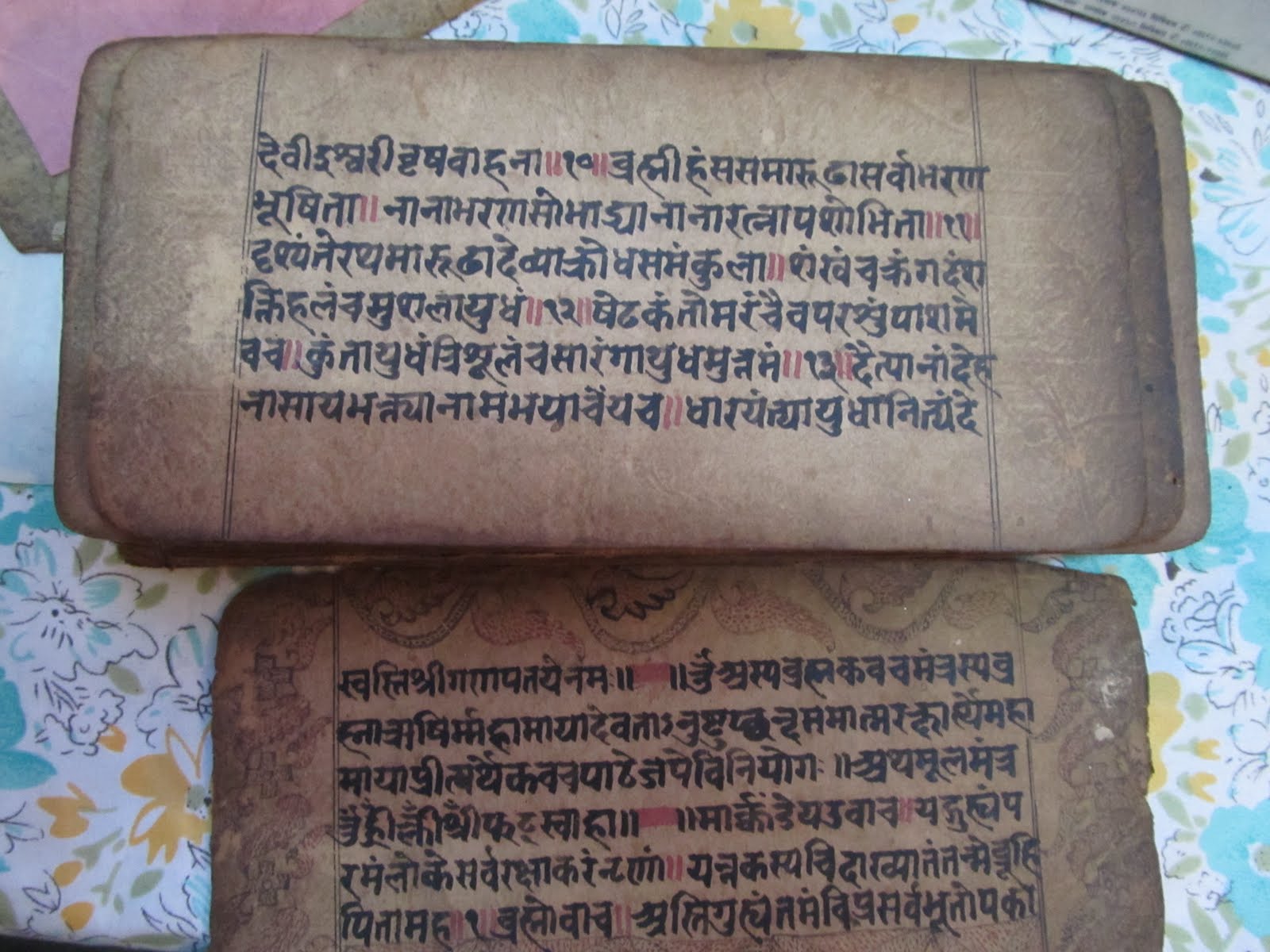
Sanskrit Manuscript at the Museum 


Antiques preserved at RamGauri Sangrahalaya
Mr. Ganesh Kumar Pradhan owner of the Museum
 Located at Rhenock in East Sikkim RamGauri Sangrahalay (Museum) is playing an imperative role for the reconstruction of the political history of Sikkim. After visiting the said museum I have concluded that only fervor can make it possible. Taken care by its owner Mr. Ganesh Kumar Pradhan, has a huge collection of documents related to the political development of the erstwhile tiny Himalayan Kingdom of Sikkim. The museum also has a collection of various tax receipts paid by the Sikkimese peasantry to their feudal Lords in the pre-independence period. In this category, the most interesting document is the bank receipt issued by Bhojraj and Jethmul Bank, the first bank of Sikkim. The most amazing part of this Archive/Museum is that it has got the entire volume of Kanchenjunga, the first news based journal of Sikkim. In a brief interview with the writer, the owner of this museum said that he has named it after his deceased parent Late Ram Pradhan and Gauri Pradhan somewhere 30 years before. Since than, the owner himself is managing its entire expenditure to preserve the incredible documents of the history of Sikkim. Among the oldest documents there are various Sanskrit Manuscripts of some unknown date (possibly of 18th century), but are getting brittle due to the lack of scientific equipments. The only scientific tool that is prevalent at the museum is thymol fumigation machine to protect the documents from various creatures.
Apart from the old documents the Sangrahalaya also has preserved various antiques like telegram machine, Gramophone, antique locks and keys, utensils, radio, clock etc. Further, one can also witness different variety of rocks found in various parts of Sikkim and few fossils possibly related to the ancient Sikkim. 
Amid to the “nothing is there in a dead past” approach of the present Sikkimese masses the museum is surviving and it is just because of the efforts made by a single person Mr. Ganesh Kumar Pradhan. Undoubtedly, the endeavor of Mr. Pradhan is serving as a coffer for the history of political evolution of Sikkim, but, due to the lack of scientific bits and pieces it is at the verge of ruination.  The museum is at this stage because of the Sikkimese mentality of ignoring the past and least paid attention from the concerned authorities.  

Petition of 1946 by the peasants of Rhenock to the Maharaj Kumar Sahib of Sikkim

The Document is preserved at Ram Gauri Sangrahalaya Rhenock by its curator Mr. Ganesh Kumar Pradhan.

Jharlangi was a force labour imposed by the Kazis and Thikadars of erstwhile Sikkim to the Sikkimese peasantry. It was a colonial gift to the Sikkimese aristocrats, by which they had achieved a license to exploit the peasants till the last breath of their lives. It is a well known fact that the real interest of the British Government did not lay on Sikkim. They wanted to utilize the kingdom for their Tibetan trade. Keeping this view in mind, the British Government had to construct roads and trade routes. While doing so, they had to depend on the Kazi-Thikadars to get the labour supply from the villages. The British Imperialists paid those Kazis- Thikadars but, the latter used their peasants to work for them without paying their wages. In such a system, the peasant had to remain absent at least a week from home, “besides having provided himself with warm clothing at prohibitive cost. What he would earn as wages under the prescribed rates for forced labour would barely suffice to buy his meager meal for the journey to and fro. A greedy land lord often seized upon his chance of making further easy money and called for doubled the number of men actually required. For instance, when only 20 men are requisitioned by the state, he would call for 40 men, thus doubling his own extortionate demand from the ignorant and unsuspecting ryots (Basnet, L.B. Sikkim- A short political History)

For the abolition of such corrupt practice from the soil of Sikkim, pre-Congress Associations of Sikkim like Praja Sudhar Samaj party of Tashi Tshering, Rajya Praja Mandal of Kazi Lhendup Dorjee Khangsarpa and Praja Sammelan Party of Dhan Bahadur Tiwari had played a major role. This petition also belongs to this era which was made by the peasants of Rhenock East Sikkim to the Maharaja Kumar Palden Thondup Namgyal to eradicate such an evil from the kingdom. The petition was made by late Durga Samsher Pradhan in which he has stated to His Highness Maharaj Kumar of Sikkim about the misappropriation of the Jharlangi labour by the Kazis and Thikadars for their private works. The petition was made on 24th November 1946, exactly a year before the foundation of Sikkim State Congress, the first political party of Sikkim. This document also gives authentic information about the taxation system prevalent in then Sikkim. A peasant had to pay Dhurikhazana (House Tax) @ Rs. 6 per annum and Bethi Tax Rs.12 per annum.
It is interesting that within a month of this petition the Royal Government of Sikkim issued a notification bearing No. 3590-4089/G on 31st December 1946 which finally eradicated Jharlangi from Sikkim. The said Notification has clearly mentioned “whosoever unlawfully compels any person to labour against the will of that person shall be punished with imprisonment of either description for a term which may extend to one year, or with a fine or with both”. But, we cannot ascertain that the Jharlangi labour was abolished from Sikkim due to the petition made by the peasants of Rhenock. It was in fact a demand of every Sikkimese peasant and a cry of every entity. 

J. C. White the First British Political Officer of Sikkim


Being sandwiched between warring nations, Sikkim lost much of its territory to the Bhutanese invaders in 1788, to the Nepalese invaders in 1789 and was forced to cede beautiful hills of Darjeeling in 1835 to the British for their ‘selfless’ help in repelling the Gorkha invaders. The un-demarcated Sikkim-Tibet frontier also greatly suffered the sandwiched Sikkim. In 1885, British Indian Government sent Macaulay Mission to Tibet but had to abort due to the Tibetan occupation of a fort at Lingtu. For almost five years from 1885 to 1890 Sikkim had to resist pressure from both North and the South. It was only after the Anglo-Chinese Convention the frontier between Sikkim and Tibet was delimited.
J.C White Sitting cross leg position, on his right  Sir Ugen Wangchuk Prime Minister of Bhutan. This picture abides copyright of British Library, London (www.bl.uk)
It was at this juncture, the British Indian Government appointed J.C. White as a Political Officer in Sikkim. An Engineer by profession Mr. White had a huge responsibility to solace the confrontational powers i.e. Tibet and India and to maintain peace and security in the Sangri-la. It was in the month of November 1887 Mr. White first visited Sikkim. On the outbreak of Sikkim-Tibet war 1888, he was sent as an Assistant Political Officer with peditionary force, and on conclusion of peace the following year he was offered the post of Political Officer in administrative charge of the State of Sikkim. On the subject of his appointment as the Political Officer he comments- “Naturally I gladly accepted an appointment which would give me an opportunity of living in a country I was sp anxious to see more of, and I have never regretted my decision; although in consequence of the view taken by the Government of India of my special employment oon the frontier, and the fact that I left the Public Works Department to take up this appointment, I have been a looser from a pecuniary point of view to a very large extent”…
Regarding his service in Sikkim he  writes “ At the conclusion of hostilities the Government of India made a proposal that I should remain in Sikkim, with the title of Political Officer, and administer the affaires of the state in conjunction with a Council composed of the Chief Dewans, Lamas and Kazis, and of which I was to be President”.
After the appointment of Mr. White as the Political Officer of Sikkim the British Government decided to remove Maharaja Thotub Namgyal and Maharani Yeshey Dolma from Sikkim to Kurseong, in Darjeeling District of British India. After their removal, Mr. White became the de-facto ruler of the Kingdom. It was during his tenure as a Political Officer Sikkim witnessed the birth of  Zamindari System, Thikadari System Kalobhari, Jharlangi and Theki-bethi.  


An Old Family Photograph of the Tibetans


Being a great admirer of past, to bring together old pictures from all the available sources has become a kind of ardor for me. The old pictures not only provide us information about our past but serves also as a bridge to block up a huge bay between the precedents and current. I have got this picture at http://oldindianphotos.blogspot.com. The picture with this post belongs to an unknown Tibetan family probably taken by some British Officials during their stay at Darjeeling or in some other parts of the Himalayas. The most important feature for me in this picture is the apparel of the Tibetan family. The lady is wearing a typical Tibetan dress (Bakkhu and Hanju) and her male counterpart is wearing a dress which does not bear a Tibetan feature. The upper garment he is wearing is a woolen Coat generally worn by the North Indians and the lower garment looks like a Suruwal of the Nepalese. Another interesting thing here is a turban worn by the male member which also was not a part of the Tibetan culture. Turbans were in vogue in India since Ancient period and even today it is greatly admired by rural India.  I have never seen any Tibetans wearing such attire in Sikkim or Darjeeling. Even during their exile in India they are wearing their traditional attire with the same pride as it had in Tibet.
The divergent feature of the picture puts me in a confusion to reach to a tangible conclusion. So what was it? Was it an acculturation? 

Antique picture of Bhutia Coolies


The picture is of Bhutia Coolies probably taken by some British officials in 1875. I  got this vintage picture at http://oldindianphotos.in and has simply magnetized  me. From the attire of the people on this picture there is no doubt to ascertain that they were the coolies who were probably working for some construction tasks initiated by the British. The most attractive thing which has dragged my attention on this picture is the Doko they are carrying on their back. Doko is a typical Nepali contrivance used by them in the earlier period to carry grass and fire wood and is now widely used not only in Nepal but in the entire Himalayan belt. To carry the said items the Bhutias used a similar type of contrivance which has a different shape. From this, it becomes clear that the picture was not taken in Sikkim, Bhutan or Tibet as the Nepalese were allowed to get into Sikkim a bit later. Hence, the picture of the Bhutia Coolies was possibly taken in Darjeeling and they are carrying Doko due to the influence of  Nepalese in Darjeeling.


Sikkim State Notification for the abolition of Kuruwa.


Literally ‘Kuruwa’ means a long wait in Nepali. Sometimes on account of the road condition and other factors, people sent to transport the Kalo Bhari waited for several days for the arrival of the commodities. The process of serving as a Kuruwa labour was very much similar with the process of Jharlangi. For this labour also the British Officials offered contracts to the local Kazis and Thikadars for the supply of the labourers.  For such contracts the Kazi- Thikadars were handsomely paid. But, as a Kuruwa, a peasant had to work with out any wages. During the entire wait for the Kalo Bhari, the ryot himself had to manage his resources. No excuses of a ryot were granted by the Kazi-Thikadars. Under any circumstances the ryots had to discharge their duties as Kuruwa. There were few cases in the Western Sikkim, when their Zamindar had forced them to work as Kuruwa, when they were performing the death rites of their deceased family members. As a Kuruwa they had to carry Kalo Bhari from a far away distance. There were various centers from where the Sikkimese peasants as Kuruwa labourer had to carry their loads. Some of the important centers for this labour were, Geil Khola, 27th mile, Rangpo, Melli, Teesta etc. The British Indian Railway used to unload such loads at a place called Geil Khola in Darjeeling district of modern West Bengal. From there the distance of Gangtok is nearly 70 Kilo meters. The Kuruwa had to carry their load from such a long distance and that too at their own expense. The weights of the load varied from time to time and were entirely depended on the commodities sent by the British Government. But, generally the loads were of 40 kg. weight.

If we compare British Imperialism in India with the native feudalism of Sikkim than one can notice Sikkimese feudal system was much tough and cruel. The Sikkimese feudalism became more severe and cruel after the interference of the British Government in the politics of Sikkim. In short, the responsibility for the introduction of feudalism in Sikkim also goes to the British. The Indians in the plains were directly exploited by the British authorities, who were foreigners and were concentrated in a profit making process. Of course, the pricks and pains which the Indian masses received from the colonial rule were also incomparable. But, the Sikkimese peasants were exploited by their own people, who behaved like “the very apt pupil of the British”. In Sikkimese feudalism we find the elements of French feudal system of the mid 18th century. There also the society was divided into three estates namely, the nobility, the clergy and the common people in Sikkimese society very similar kinds of elements are amply found. The only difference between the French feudalism and Sikkimese feudalism is that the peasants of France had to pay Thithe as religious tax, which was not to be paid by the Sikkimese peasants. Moreover, the story of a poor and destitute either he may belong to Sikkim or France is almost similar, as poverty and suffering does not have a common language, race, caste or even the boundaries. But, in every revolution, some signs, some symbols, comes to occupy a pre eminent position and those signs or symbols become the watchword for the masses. In Sikkim, people’s sufferings, their woes, trials and tribulations came to be symbolized by Kalo Bhari, Jharlangi, Theki Bheti, and Kuruwa.
Such unlawful system was eliminated by the Notification from the Maharaja of Sikkim Sir Tashi Namgyal which is pasted here with this post. It was issued by the General Department (Misc. Branch) Gangtok on the 31st Day of January 1947. It bears a Notification No. 4816/G(M) and has a Memo No 4817-5316/G(M). The Notification states an immediate implementation of the Royal Order in the entire Kingdom. It was issued in three languages English, Tibetan and Nepali which were regarded as the prominent languages of the former Himalayan Kingdom of Sikkim. After the issue of the Notification from His Highness Maharaja Sir Tashi Namgyal Copies of the same were forwarded to the Landlords, Managers and Officer-in-Charge, Police Out and Patrol Posts in Sikkim for information.
I am greatly obliged to Mr. Shital Pradhan a well known name in Sikkim History for sharing this extraordinary certificate with me. His help and support will lead me a long way in my days to come.