
Showing posts with label Palden Thondup Namgyal. Show all posts

Government Senior Secondary School Ranipool- A Story of its Establishment


Ranipool School at Ghatttey Hill  in the 60's

Since my school days I was always curious to know about the founder of the school from where I got into the world of knowledge and acquaintance. It was indeed a slumbered historical sense that was at its initial stage which forced me to know much about the founder of my school. I also had a big question on my infant mind why my school was entitled as Ghattey School? Few people informed me that before the establishment of a school at the earlier site there used to be a Pani Ghatta (Grinding machine that runs with water power) and the place was thence known as Ghattey Dara (Ghattey Hill). Hence after the commencement of a Primary School at the Ghattey Hill the school got its name as Ghattey School. Few others informed me that the school was founded by a person from Namli called Brihaspati Parsai. This was the only knowledge that I had been able to acquire about Government Senior Secondary School Ranipool before I accomplished my Twelfth Standard.

Teachers' and Students' in the 60's
Late Brihaspati Parsai collecting funds for the School 
To acquire more knowledge about Government Sr. Sec. School Ranipool I decided to meet the descendents of the founder of my School during my fieldwork. I met Mr. N. B Parsai one of the sons of Late Brihaspati Parsai from whom I had been able to extract many unheard and unknown facts about the establishment of the said school. According to him the founder of Ghattey School Late Brihaspati Parsai had never seen any schools in his childhood. During the construction of NH 31A he worked there as a labour and later became an A Class contractor. In 1944 as a contractor he took up the task of “Cutting off Land” where he had to suffer a heavy loss. The Officer of Public Works Department Fakir Chand Jali (who was also the First Overseer and First Chief Engineer of Sikkim) told him that he incurred loss owing to his lack of knowledge in English language. That incident was a turning point for the foundation of Ranipool School. Immediately after this event Late Parsai with the help of a supervisor started a school in 1945 at Labours’ Quarter. Later Brihaspati Parsai asked a piece of land from one Langadey (Limp) Kazi for the construction of a school. The Kazi was kind enough to donate a piece of land to start a school at Ghattey Dara. Thus, the foundation of Ranipool School was laid with the efforts of an illiterate at the Ghattey Hill.
Mr. N. B Parsai has given me additional information about the first teachers of this school. According to him, Late Jayadev Sharma of Rumtek and Damber Gurung were the first teachers to serve Ranipool School. He further updated me that the school was once visited by Maharajkumar Sahib Palden Thondup Namgyal. “It was in the summer of 1946 a Wyllian Jeep came to the school compound and a gentleman in a royal costume came out of it. We did not pay much heed to know about him as we were busy in playing. The gentleman looked us for a while and moved into the office. Within a minute Jaydev Sir came out and introduced him as Maharajkumar Sahib. Maharajkumar Sahib Palden Thondup Namgyal encouraged our teachers to impart good education to the children. It was indeed a great moment for all the students to get a glimpse of the Maharajkumar Sahib at our School Compound”.
Welcoming the dignitaries during an event in the 60's 
Late Brihaspati Parsai had a deep lament that he could not study therefore; he had a determined thought that the children of peasants would be suppressed until they do not get education. Hence, with the intention of educating everybody he raised donation to run the Ghattey Hillock School. For several years he himself paid the salary for the teachers and other staff. Later the Royal Palace turned the Ghattey Hill School into a government aided institution and began to provide a grant of Rs. 30/- per month. But, the sanctioned amount from the Royal Sikkim Government was not enough to run a full fledged school. Therefore, late Brihaspati Parsai moved from door to door asking for donation for the salary of the teachers.All the students of today’s Brihaspati Parsai Memorial Senior Secondary School are greatly indebted to its illiterate founder who had an extreme faith in educating the masses for a colossal change.

Students and Teachers with new furniture on the day of becoming a Govt. aided school
Recent picture of Brihaspati Parsai Memorial School 
Respecting the contributions of Late Brihaspati Parsai to impart modern education among the peasantry of Sikkim the Sikkim Government has changed the name of Government Sr. Secondary School Ranipool as Brihaspati Parsai Memorial Senior Secondary School. For the encouragement among the students the Parsai family of Namli is providing a scholarship of Rs. 10,000/- each every year for the best two students of the school founded by their grandpa late Brihaspati Parsai.


Sikkim Coronation: From the Collection of Dr. Alice S. Kandell’s Photographs

Picture of Dr. Alice S. Kandell 


Sikkim Coronation 1965- The King and the Queen Pic: Dr Alice S Kandell

Guest at Sikkim Coronation- Photographer Dr. Kandell on the queue to put Khada to the King 

King and Queen getting ready to fly Bhutan Pic: Dr. Alice S Kandell
  
King and Queen on the Royal Throne Pic: Dr. Alice S Kandell

King and Queen during Coronation Pic: Dr. Alice S. Kandell

The Chogyal receiving salute from Sikkim Guards Pic: Dr. Alice S. Kandell

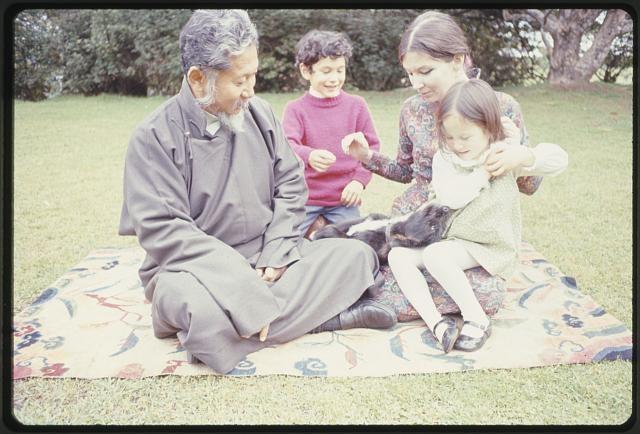
Chogyal Palden Thondup Namgyal and Gyalmo Hope Cooke of Sikkim Pic: Dr. Alice S Kandell

Marketplace of Gangtok in 1965 Pic: Dr. Alice S Kandell

Nepali Naumati Baja on the day of Chogyal's Coronation Pic: Dr. Alice S Kandell

Nepali Girls on the Coronation Day  Pic: Dr. Alice S Kandell


Princess of Sikkim Standing on Right Pic: Dr. Alice S Kandell

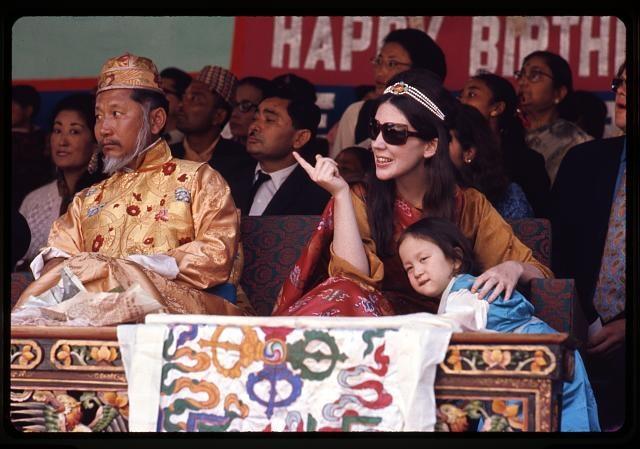
Royal Procession on Chogyal's Birthday Pic Dr. Alice S Kandell

The photographs taken by Dr. Alice S. Kandell in Sikkim used to be rare until she dedicated her rights to the public domain as a generous gift to the Library of Congress, Prints & Photographs Division in 2010. It is from this website we also have been able to get the erstwhile glimpse of Sikkim. Dr. Kandell captured these flamboyant pictures in order to document a vanishing culture of the Sikkimese society. During her visits between 1965 and 1979 (primarily 1965-1971), Dr. Kandell received special permission to photograph Buddhist monks and lamas, ceremonial dances, and monasteries; people working on farms, in canning factories, and at special crafts; and the royal palace and chapel at Gangtok, including the last king, Chogyal Palden Thondup Namgyal, his American wife Queen Hope Cooke (Dr. Kandell's college friend), and their family.
Apart from the Royal pictures Dr. Kandell has also taken various pictures of far off villages like Singhik and Lachung, the mountains of Kānchenjunga, the Ralang Hot Springs, and the Gangtok bazaar as well as different ethnic groups including the Kirati (Kiranti), Lepcha, Nepalese, and Bhutia people.
Other photographs taken by Dr. Kandell are available at http://www.loc.gov/pictures/search/?st=grid&co=kskm

Sikkim Almanac: A Monarchical Souvenir to the State of Sikkim


Sikkim Almanac
Every Sikkimese has seen Sikkim Almanac hanging on the walls of every Official building or in every house to get an idea about the official government sanctioned holidays for a particular year. But, we have never paid any attention to understand its link with the past of Sikkim. The Sikkim Almanac nowadays is merely serving as an everyday planner of the Sikkimese people. But, distant from being the official holiday marker the Sikkim Almanac has its profound bond with the history of the erstwhile Himalayan Kingdom of Sikkim.
The Royal Government of Sikkim began to issue its Almanac, which lists the official government sanctioned holidays for each year, in the mid 50’s of the last century. The noble task was undertaken during the glorious reign of Maharaja Sir Tashi Namgyal. The sole purpose of issuing such Government Calendar was to inform the subjects of the Maharaja about the Government sanctioned holidays in the kingdom of Sikkim, so that they could avoid themselves from reaching the Capital during holidays for their Official works. The Government sanctioned holidays in the calendar were highlighted with red colour which was easier for every individual to get an idea of the existing holiday in a particular month. The very same layout of Almanac is still prevalent in the Sikkim Almanac issued by the Government of Sikkim.
The Sikkim Almanac has some distinctive features as well. In conjunction with the dates of Gregorian calendar in English are the dates of Tibetan Lunar Calendar in Tibetan scripts. Presently, the heading carries emblem of Sikkim Government but, during independent Sikkim it used to have a portrait of the reigning king of the Kingdom. The fifties (1950’s) version of the Sikkim Almanac carried pictures of Maharaja Sir Tashi Namgyal in full Royal ceremonial dress, while the pictures of Chogyal Palden Thondup Namgyal were more casuals. The placing of the King’s pictures on Sikkim Almanac was stopped after Sikkim’s integration with the Indian Union. Apart from English and Tibetan languages the title of the Almanac is also written in other Sikkimese languages like Lepcha, Nepali and Limbu which is in vogue since its first issue.
Either side of the Almanac is bordered by the Eight Lucky Signs known as Tashi Tagey (Tak Gye) in Tibetan. These auspicious signs are symbolic with the life and teachings of the enlightened Tathagatha. After Sikkim’s integration with India, the Sikkim Almanac is printed and distributed by Home Department, Government of Sikkim every year.

Sikkim Jewels: A Legacy of Royal Government of Sikkim Shuts Down


Pic: Sikkim Now

Sikkim Jewels Ltd. Was established in 1972 during the reign of its last Chogyal Palden Thondup Namgyal. The foremost intention of establishing such industry by the Royal Government of Sikkim was to cater to the demand of Watch Jewels and Cup Jewels. The Company had started with a very small capacity of producing 2.00 Lakhs of Cup Jewels and 1.50 Lakhs of Watch Jewels per month. It was established at Tadong Gangtok and is spread over 3.23 acres of land. Sikkim Jewels Ltd used to be the second oldest Company of the erstwhile Kingdom of Sikkim. The oldest of such Companies is Food Preservation Factory at Singtam established in 1956, during the reign of Maharaja Sir Tashi Namgyal, the reformist. The Company had strengthened its position in the market for Watch Jewels, Cup Jewels and Rotor Magnets. In all these products, it had obtained sizeable orders from all the leading manufacturers of India like Hindustan Machine Tools Ltd., Titan Industries Ltd., and Allwyn Watches Ltd., Jaipur Meters and Electricals Ltd., VXL India Ltd., and Andhra Pradesh Electricals and Equipment Corporation.
There was heavy recession in domestic market in all the three major items produced by Sikkim Jewels Ltd. Hence, the factory was running under its own capacity since 1997. Only in 2000-2001, the unit had been able to increase its production after receiving substantial orders from both domestic and international market. The unit produced a record of 30 Lakhs Watch Jewels in November 2000. Amid to its increase in production, the current world wide economic depression has compelled Sikkim Jewels Ltd. for an untimed demise.
The Daily Telegraph of March 11 2011 reports:
The Sikkim government has decided to wind up Sikkim Time Corporation, Sikkim Jewels Limited and Sikkim Precision Industries Ltd after attempts to revive the three loss-making public sector undertakings through private participation failed....... State commerce and industries secretary M.G. Kiran said the decision to shut down the three PSUs had been taken by the cabinet on March 2.

Lost Days of Sikkim Monarchs

Inside Father's Car- Prince Tenzing Namgyal and Prince Wangchuk Namgyal

Prince Tenzing Namgyal getting ready for a "Test Drive"?

Prince Tenzing Namgyal

Football is always a favorite sport in Sikkim- Prince Tenzing with his fellow players at the palace ground 
These pictures bear copyright of http://gxp1201.tibetcul.com (A website of People's Republic of China) I am greatly indebted to Tempa Transhimalayan Arts Taipei Taiwan for sharing link of these incredible pictures of erstwhile Himalayan Kingdom of Sikkim.  

Some Rare pictures of the Last Days of Sikkim Royals

A Royal Lady with Sikkim Guards

Chogyal Palden Thondup Namgyal & Hope Cooke Namgyal with princess Hope Leezum and Prince Palden

The Royal Couple at the King's Birthday

Gyalmo Hope Cooke Namgyal during her Reading Hours
The Chogyal being greeted by his subjects


Chogyal's beloved Hope-La
These pictures bear copyright of http://gxp1201.tibetcul.com (A website of People's Republic of China) I am greatly indebted to Tempa Transhimalayan Arts Taipei Taiwan for sharing the link of these valuable pictures with me.  

Last Days of Sikkim Royals- The Chogyal and Gyalmo

The Chogyal and Gyalmo during a religious gathering at the Palace

Meeting commoners during Royal tours

The King with his beloved queen Hope-La

During Religious Celebration


During Rituals

On the palace lawn 

Chogyal and Gyalmo

The royal couple inside the palace
These pictures bear copyright of http://gxp1201.tibetcul.com  (A website of People's Republic of China)I am greatly indebted to Tempa Transhimalayan Art, Taipei, Taiwan for sharing the link of these incredible pictures with me. 

Sikkim- Chirping inside the Past

Gangtok on 28th March 1973 crammed with pro and anti-merger group

Governor B.B Lal and L.D Kazi with the members of First Sikkim Legislative Council

Indian Prime Minister Mrs. Indira Gandhi visiting Sikkim in 1984

Mr. N.B Bhandari being sworn in as the Chief Minister of Sikkim

Mr. Bhandari with the members of Sikkim Legislative Assembly 

Funeral procession of Miwang Denzong Chogyal Palden Thondup Namgyal

Mr. B.B Gurung being sworn in as third Chief Minister of Sikkim

Mr. Sancha Man Limboo being sworn in as fourth Chief Minister of Sikkim