
An elapsed Face of History- Chandra Bahadur Rai


Mr. Chandra Bahadur Rai 

 The History of Sikkim has been studied by different scholars with various aspects including the various ethnic groups. The researchers and scholars have even profoundly studied about the history of the three major ethnic groups i.e. the Lepchas, the Bhutias and the Nepalese in Sikkim. But, we find the history of Sikkim is generally pre-occupied with political history and then its immediate aspects of dynastic history and Sikkim’s relation with British India. As most of the historians gave top priority to the political history of Sikkim during British-India, the democratic history of Sikkim after the Indian independence is generally neglected and pushed behind. It is a well known fact that political history has always superseded the other aspects of study of history which greatly disregards the contribution of the common people. The democratic movement of Sikkim was also a political development which has always been studied from the elite’s perspectives discounting the contribution made by the commoners to attain democracy. This is a story of a commoner of the erstwhile Himalayan Kingdom of Sikkim who has thrown himself in the blizzard of democratic movement that had rocked the tiny Himalayan kingdom of Sikkim after the Indian independence.
Mr. Chandra Bahadur Rai was born in 1936 at Dacca in present day Bangladesh. His father Haikumsingh Rai was a Subedar in British Indian Army. After his father’s retirement, young Chandra Bahadur and his family had come to Pakki Gaon, Malbassey in 1943. He studied at Chakhung School up to Class VI. Since childhood, Chandra Bahadur had many questions in his mind against the pain given to the peasants by the notorious feudal system. His curiosity about such injustices led him to join Rajya Praja Sammelan (a political organization founded at Chakhung) initiated by Kazi Lhendup Dorjee Khangsarpa popularly known as Kancha Kazi.  In a brief interview he has informed us about the popular demands of the Sikkim State Congress regarding the abolition of Forced labours like Kalobhari, Jharlangi, Theki Bethi, Kuruwa etc. Mr. C. B Rai further discussed about the popular Slogans of the Sikkim State Congress after the Indian independence. Among such slogans a slogan for reformation of tenancy has its own importance in the political development of Sikkim. The Slogan was as under:-
Zamin Kasko Jotneyko….. Ghar Kasko Potneyko!!!
i.e. Land belongs to those who plough it……House belongs to those who take care of it!!
This slogan provides ample evidence about the condition of peasants in Sikkim who were debarred from possessing landed property against which they were clamoring for reformation. It is to be mentioned here that with the initiatives taken by the Sikkim State Congress the feudal system of Sikkim was remove.   
Another interesting slogan of the period was
Bhare Bhure Raja Masnai Parcha…..Sikkim Lai Bharat ma Gabhnai Parcha!!!
 Petty King should be abolished……Sikkim should be merged with India!!
This slogan highlights the initial demands of the Sikkim State Congress to abolish monarchy in Sikkim and to merge Sikkim into the Union of India. The demand of merger of Sikkim was put behind curtain after the reformation made by its reformist monarch Sir Tashi Namgyal.
In the General Election of January 1973 (the last General Election based on the lawless Parity Formula) Mr. Chandra Bahadur Rai was elected from Pemayangtshe Constituency, West Sikkim. After attending a massive victory in the election he served as a Councillor till 1974. In 1973 Election, due to the tarnished parity formula there was manipulation in the counting of votes. This led to the people’s protest movement which further led to the formation of a Joint Action Committee (JAC). The Committee wrote a petition to the Government of India highlighting the suppression and injustice prevalent in Sikkim. Mr. Rai was also among the signatories of the said petition.
After the election of 1974, Mr. Rai left active politics and since then he did not contest any election. While asking about the reason why did he quit politics he said-“It was the tears of the Chogyal and Gyalmo that made me to quit it forever”. Presently, at the age of 75 this ex-Councillor is living at Pakki Gaon in West Sikkim with reminiscences of independent Sikkim.

The Agitation of 1973 pic. courtesy Mr. C.B Rai 


RamGauri Sangrahalaya - The Only Private Museum of Sikkim.

Newspapers and journals 
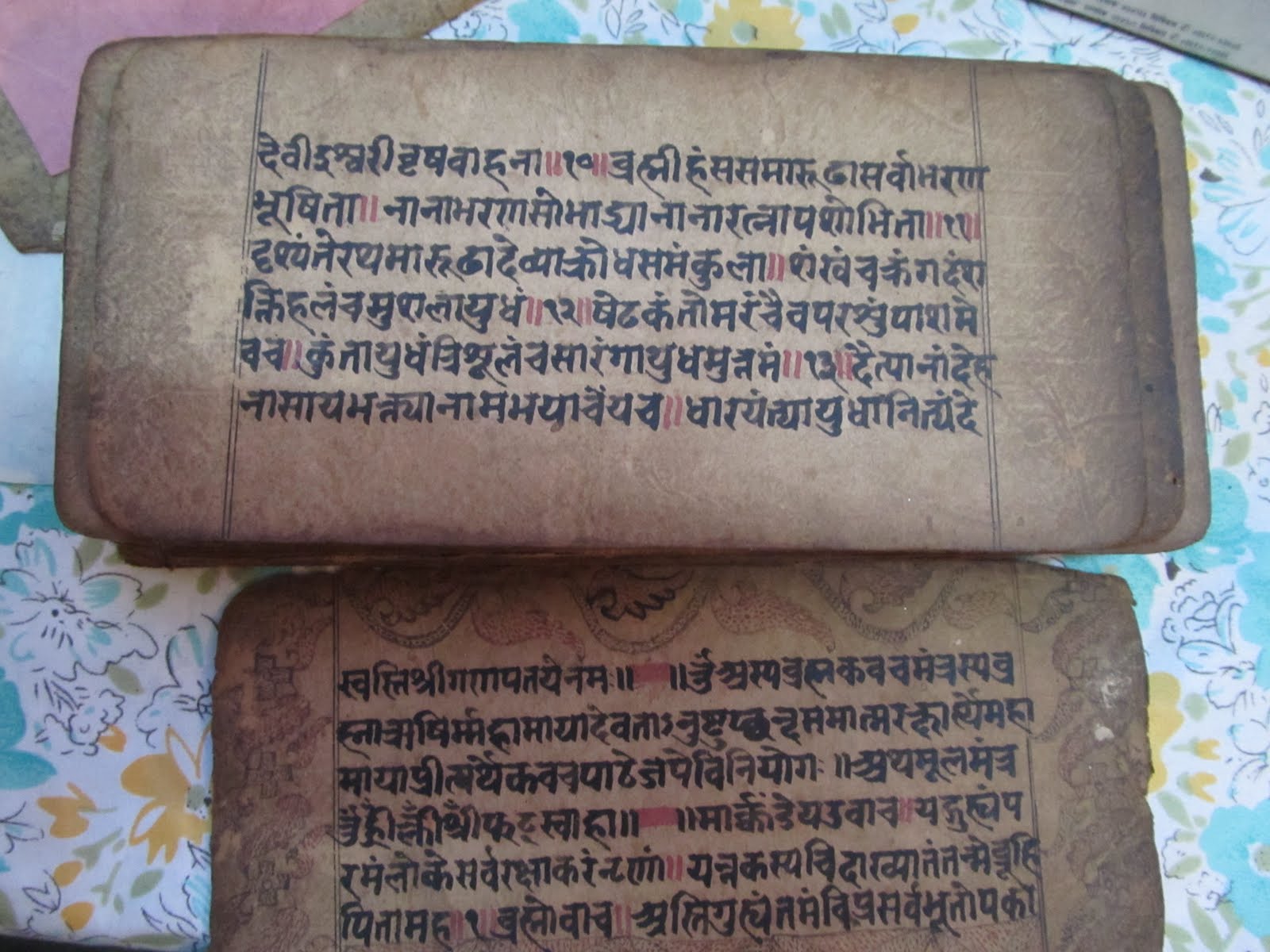
Sanskrit Manuscript at the Museum 


Antiques preserved at RamGauri Sangrahalaya
Mr. Ganesh Kumar Pradhan owner of the Museum
 Located at Rhenock in East Sikkim RamGauri Sangrahalay (Museum) is playing an imperative role for the reconstruction of the political history of Sikkim. After visiting the said museum I have concluded that only fervor can make it possible. Taken care by its owner Mr. Ganesh Kumar Pradhan, has a huge collection of documents related to the political development of the erstwhile tiny Himalayan Kingdom of Sikkim. The museum also has a collection of various tax receipts paid by the Sikkimese peasantry to their feudal Lords in the pre-independence period. In this category, the most interesting document is the bank receipt issued by Bhojraj and Jethmul Bank, the first bank of Sikkim. The most amazing part of this Archive/Museum is that it has got the entire volume of Kanchenjunga, the first news based journal of Sikkim. In a brief interview with the writer, the owner of this museum said that he has named it after his deceased parent Late Ram Pradhan and Gauri Pradhan somewhere 30 years before. Since than, the owner himself is managing its entire expenditure to preserve the incredible documents of the history of Sikkim. Among the oldest documents there are various Sanskrit Manuscripts of some unknown date (possibly of 18th century), but are getting brittle due to the lack of scientific equipments. The only scientific tool that is prevalent at the museum is thymol fumigation machine to protect the documents from various creatures.
Apart from the old documents the Sangrahalaya also has preserved various antiques like telegram machine, Gramophone, antique locks and keys, utensils, radio, clock etc. Further, one can also witness different variety of rocks found in various parts of Sikkim and few fossils possibly related to the ancient Sikkim. 
Amid to the “nothing is there in a dead past” approach of the present Sikkimese masses the museum is surviving and it is just because of the efforts made by a single person Mr. Ganesh Kumar Pradhan. Undoubtedly, the endeavor of Mr. Pradhan is serving as a coffer for the history of political evolution of Sikkim, but, due to the lack of scientific bits and pieces it is at the verge of ruination.  The museum is at this stage because of the Sikkimese mentality of ignoring the past and least paid attention from the concerned authorities.  

Petition of 1946 by the peasants of Rhenock to the Maharaj Kumar Sahib of Sikkim

The Document is preserved at Ram Gauri Sangrahalaya Rhenock by its curator Mr. Ganesh Kumar Pradhan.

Jharlangi was a force labour imposed by the Kazis and Thikadars of erstwhile Sikkim to the Sikkimese peasantry. It was a colonial gift to the Sikkimese aristocrats, by which they had achieved a license to exploit the peasants till the last breath of their lives. It is a well known fact that the real interest of the British Government did not lay on Sikkim. They wanted to utilize the kingdom for their Tibetan trade. Keeping this view in mind, the British Government had to construct roads and trade routes. While doing so, they had to depend on the Kazi-Thikadars to get the labour supply from the villages. The British Imperialists paid those Kazis- Thikadars but, the latter used their peasants to work for them without paying their wages. In such a system, the peasant had to remain absent at least a week from home, “besides having provided himself with warm clothing at prohibitive cost. What he would earn as wages under the prescribed rates for forced labour would barely suffice to buy his meager meal for the journey to and fro. A greedy land lord often seized upon his chance of making further easy money and called for doubled the number of men actually required. For instance, when only 20 men are requisitioned by the state, he would call for 40 men, thus doubling his own extortionate demand from the ignorant and unsuspecting ryots (Basnet, L.B. Sikkim- A short political History)

For the abolition of such corrupt practice from the soil of Sikkim, pre-Congress Associations of Sikkim like Praja Sudhar Samaj party of Tashi Tshering, Rajya Praja Mandal of Kazi Lhendup Dorjee Khangsarpa and Praja Sammelan Party of Dhan Bahadur Tiwari had played a major role. This petition also belongs to this era which was made by the peasants of Rhenock East Sikkim to the Maharaja Kumar Palden Thondup Namgyal to eradicate such an evil from the kingdom. The petition was made by late Durga Samsher Pradhan in which he has stated to His Highness Maharaj Kumar of Sikkim about the misappropriation of the Jharlangi labour by the Kazis and Thikadars for their private works. The petition was made on 24th November 1946, exactly a year before the foundation of Sikkim State Congress, the first political party of Sikkim. This document also gives authentic information about the taxation system prevalent in then Sikkim. A peasant had to pay Dhurikhazana (House Tax) @ Rs. 6 per annum and Bethi Tax Rs.12 per annum.
It is interesting that within a month of this petition the Royal Government of Sikkim issued a notification bearing No. 3590-4089/G on 31st December 1946 which finally eradicated Jharlangi from Sikkim. The said Notification has clearly mentioned “whosoever unlawfully compels any person to labour against the will of that person shall be punished with imprisonment of either description for a term which may extend to one year, or with a fine or with both”. But, we cannot ascertain that the Jharlangi labour was abolished from Sikkim due to the petition made by the peasants of Rhenock. It was in fact a demand of every Sikkimese peasant and a cry of every entity. 

J. C. White the First British Political Officer of Sikkim


Being sandwiched between warring nations, Sikkim lost much of its territory to the Bhutanese invaders in 1788, to the Nepalese invaders in 1789 and was forced to cede beautiful hills of Darjeeling in 1835 to the British for their ‘selfless’ help in repelling the Gorkha invaders. The un-demarcated Sikkim-Tibet frontier also greatly suffered the sandwiched Sikkim. In 1885, British Indian Government sent Macaulay Mission to Tibet but had to abort due to the Tibetan occupation of a fort at Lingtu. For almost five years from 1885 to 1890 Sikkim had to resist pressure from both North and the South. It was only after the Anglo-Chinese Convention the frontier between Sikkim and Tibet was delimited.
J.C White Sitting cross leg position, on his right  Sir Ugen Wangchuk Prime Minister of Bhutan. This picture abides copyright of British Library, London (www.bl.uk)
It was at this juncture, the British Indian Government appointed J.C. White as a Political Officer in Sikkim. An Engineer by profession Mr. White had a huge responsibility to solace the confrontational powers i.e. Tibet and India and to maintain peace and security in the Sangri-la. It was in the month of November 1887 Mr. White first visited Sikkim. On the outbreak of Sikkim-Tibet war 1888, he was sent as an Assistant Political Officer with peditionary force, and on conclusion of peace the following year he was offered the post of Political Officer in administrative charge of the State of Sikkim. On the subject of his appointment as the Political Officer he comments- “Naturally I gladly accepted an appointment which would give me an opportunity of living in a country I was sp anxious to see more of, and I have never regretted my decision; although in consequence of the view taken by the Government of India of my special employment oon the frontier, and the fact that I left the Public Works Department to take up this appointment, I have been a looser from a pecuniary point of view to a very large extent”…
Regarding his service in Sikkim he  writes “ At the conclusion of hostilities the Government of India made a proposal that I should remain in Sikkim, with the title of Political Officer, and administer the affaires of the state in conjunction with a Council composed of the Chief Dewans, Lamas and Kazis, and of which I was to be President”.
After the appointment of Mr. White as the Political Officer of Sikkim the British Government decided to remove Maharaja Thotub Namgyal and Maharani Yeshey Dolma from Sikkim to Kurseong, in Darjeeling District of British India. After their removal, Mr. White became the de-facto ruler of the Kingdom. It was during his tenure as a Political Officer Sikkim witnessed the birth of  Zamindari System, Thikadari System Kalobhari, Jharlangi and Theki-bethi.  


An Old Family Photograph of the Tibetans


Being a great admirer of past, to bring together old pictures from all the available sources has become a kind of ardor for me. The old pictures not only provide us information about our past but serves also as a bridge to block up a huge bay between the precedents and current. I have got this picture at http://oldindianphotos.blogspot.com. The picture with this post belongs to an unknown Tibetan family probably taken by some British Officials during their stay at Darjeeling or in some other parts of the Himalayas. The most important feature for me in this picture is the apparel of the Tibetan family. The lady is wearing a typical Tibetan dress (Bakkhu and Hanju) and her male counterpart is wearing a dress which does not bear a Tibetan feature. The upper garment he is wearing is a woolen Coat generally worn by the North Indians and the lower garment looks like a Suruwal of the Nepalese. Another interesting thing here is a turban worn by the male member which also was not a part of the Tibetan culture. Turbans were in vogue in India since Ancient period and even today it is greatly admired by rural India.  I have never seen any Tibetans wearing such attire in Sikkim or Darjeeling. Even during their exile in India they are wearing their traditional attire with the same pride as it had in Tibet.
The divergent feature of the picture puts me in a confusion to reach to a tangible conclusion. So what was it? Was it an acculturation? 

Antique picture of Bhutia Coolies


The picture is of Bhutia Coolies probably taken by some British officials in 1875. I  got this vintage picture at http://oldindianphotos.in and has simply magnetized  me. From the attire of the people on this picture there is no doubt to ascertain that they were the coolies who were probably working for some construction tasks initiated by the British. The most attractive thing which has dragged my attention on this picture is the Doko they are carrying on their back. Doko is a typical Nepali contrivance used by them in the earlier period to carry grass and fire wood and is now widely used not only in Nepal but in the entire Himalayan belt. To carry the said items the Bhutias used a similar type of contrivance which has a different shape. From this, it becomes clear that the picture was not taken in Sikkim, Bhutan or Tibet as the Nepalese were allowed to get into Sikkim a bit later. Hence, the picture of the Bhutia Coolies was possibly taken in Darjeeling and they are carrying Doko due to the influence of  Nepalese in Darjeeling.


Sikkim State Notification for the abolition of Kuruwa.


Literally ‘Kuruwa’ means a long wait in Nepali. Sometimes on account of the road condition and other factors, people sent to transport the Kalo Bhari waited for several days for the arrival of the commodities. The process of serving as a Kuruwa labour was very much similar with the process of Jharlangi. For this labour also the British Officials offered contracts to the local Kazis and Thikadars for the supply of the labourers.  For such contracts the Kazi- Thikadars were handsomely paid. But, as a Kuruwa, a peasant had to work with out any wages. During the entire wait for the Kalo Bhari, the ryot himself had to manage his resources. No excuses of a ryot were granted by the Kazi-Thikadars. Under any circumstances the ryots had to discharge their duties as Kuruwa. There were few cases in the Western Sikkim, when their Zamindar had forced them to work as Kuruwa, when they were performing the death rites of their deceased family members. As a Kuruwa they had to carry Kalo Bhari from a far away distance. There were various centers from where the Sikkimese peasants as Kuruwa labourer had to carry their loads. Some of the important centers for this labour were, Geil Khola, 27th mile, Rangpo, Melli, Teesta etc. The British Indian Railway used to unload such loads at a place called Geil Khola in Darjeeling district of modern West Bengal. From there the distance of Gangtok is nearly 70 Kilo meters. The Kuruwa had to carry their load from such a long distance and that too at their own expense. The weights of the load varied from time to time and were entirely depended on the commodities sent by the British Government. But, generally the loads were of 40 kg. weight.

If we compare British Imperialism in India with the native feudalism of Sikkim than one can notice Sikkimese feudal system was much tough and cruel. The Sikkimese feudalism became more severe and cruel after the interference of the British Government in the politics of Sikkim. In short, the responsibility for the introduction of feudalism in Sikkim also goes to the British. The Indians in the plains were directly exploited by the British authorities, who were foreigners and were concentrated in a profit making process. Of course, the pricks and pains which the Indian masses received from the colonial rule were also incomparable. But, the Sikkimese peasants were exploited by their own people, who behaved like “the very apt pupil of the British”. In Sikkimese feudalism we find the elements of French feudal system of the mid 18th century. There also the society was divided into three estates namely, the nobility, the clergy and the common people in Sikkimese society very similar kinds of elements are amply found. The only difference between the French feudalism and Sikkimese feudalism is that the peasants of France had to pay Thithe as religious tax, which was not to be paid by the Sikkimese peasants. Moreover, the story of a poor and destitute either he may belong to Sikkim or France is almost similar, as poverty and suffering does not have a common language, race, caste or even the boundaries. But, in every revolution, some signs, some symbols, comes to occupy a pre eminent position and those signs or symbols become the watchword for the masses. In Sikkim, people’s sufferings, their woes, trials and tribulations came to be symbolized by Kalo Bhari, Jharlangi, Theki Bheti, and Kuruwa.
Such unlawful system was eliminated by the Notification from the Maharaja of Sikkim Sir Tashi Namgyal which is pasted here with this post. It was issued by the General Department (Misc. Branch) Gangtok on the 31st Day of January 1947. It bears a Notification No. 4816/G(M) and has a Memo No 4817-5316/G(M). The Notification states an immediate implementation of the Royal Order in the entire Kingdom. It was issued in three languages English, Tibetan and Nepali which were regarded as the prominent languages of the former Himalayan Kingdom of Sikkim. After the issue of the Notification from His Highness Maharaja Sir Tashi Namgyal Copies of the same were forwarded to the Landlords, Managers and Officer-in-Charge, Police Out and Patrol Posts in Sikkim for information.
I am greatly obliged to Mr. Shital Pradhan a well known name in Sikkim History for sharing this extraordinary certificate with me. His help and support will lead me a long way in my days to come.  


Extract from the Citation of Military Medal of VC Ganju Lama


Citation of Military Medal
No.78763 Rifleman Ganju Lama MM
7th Gurkha Rifles, Indian Army


"On 17th May, 1944 two companies moved forward to Mile 33 on the Imphal-Tiddim Road to secure a road block position in that area. B company was operating on the East of the main road and located an enemy position with many bunkers. The leading platoon attacked and cleared the outlaying bunker area and on reaching the nala came under heavy machine gun fire from three enemy tanks which were harboured there. Rifleman Ganju Lama was No.1 on the PIAT (projector infantry anti-tank) attached to the forward platoon and on seeing their difficulty immediately stalked forward and secured a position for his weapon, although by this time the enemy tanks had opened fire with H E from their 37mm Guns, Rifleman Ganju Lama then opened fire at 60 yards range and with his second bomb scored a direct hit on a tank which was later seen to be on fire. The platoon was later recalled on orders from the company commander and Ganju Lama remained to cover their withdrawal. Throughout this action this rifleman displayed remarkable resource, coolness and entire disregard for his personal safety, setting a high example to all in his vicinity".
The London Gazette Notification
Dated 5th of October, 1944.

The Government of India also recognized the valour of this gallant by appointing Ganju Lama as an ADC to the President of India in 1964. He got his retirement from the said post in 1972. The Government of Sikkim has renamed the Ravangla- Tarku Road as Ganju Lama Road.


Picture above VC Ganju Lama with Queen of England
Picture below VC Ganju Lama with his family at Sangmoo in South Sikkim

Kashiraj Pradhan – Father of Journalism in Sikkim


Kashiraj Pradhan was born on 11th December 1905 at Pakyong in East Sikkim. His father Kaluram Pradhan was an innovative and an audacious individual and his mother Bhadralakshmi Pradhan was a religious and well-mannered lady. The family of Lt. Kashiraj Pradhan was accountable for the economic growth of Sikkim with their innovative ideas. His grandfather Lt. Chandrabir Pradhan popularly known as Chandrabir Taksari or Chandrabir Maskey, along with few other Newars had taken the initiative of issuing copper coins in Sikkim. Earlier, there was the influence of Tibetan coins in Sikkim but, after the coming of the British in India Sikkim had the circulation of East India Company coins. For the process of issuing own coins of Sikkim they had taken their permission from the Sikkim Durbar and started exploration of copper at Sadam, Chakhung, Motang (Pandam) and Pachey. For the introduction of copper coins in Sikkim which was exclusively made by them, the family of Lt. Chandrabir Pradhan is also known as Taksari (meaning a person who mints coin).
The greatest contribution of the Taksaris of Sikkim is the construction of a cart road from Teesta to Gangtok. They also played a crucial role for setting up of markets in different parts of Sikkim. Today’s Singtam, Rongli, Rangpo and Pakyong Bazars were established due to the determined exertions made by the families of Lt. Kashiraj Pradhan.  
In 1930, Kashiraj accomplished his Graduation from the esteemed Calcutta University. He was also the second graduate from the kingdom of Sikkim. The first person to become a graduate was Hari Prasad Pradhan. After his studies, Kashiraj entered into a teaching job at Sir Tashi Namgyal High School Gangtok where he served till 1947. In 1949, he was elected as a Cabinet Secretary with this appointment, Kashiraj entered into the politics of Sikkim. In the first General Election of 1953, Kashiraj Pradhan made an overwhelming victory and was elected as the Leader of Parliament Board. He was also nominated as an Executive Councilor in the Sikkim Durbar. Kashiraj had been given the charge of Education, Public Works, Excise and Tourism in the Sikkim Durbar’s Executive Council of 1953. With his victory in the Second General Election of 1959, he was appointed as Senior Executive Councilor by the Sikkim Durbar.
The greatest contribution of Lt. Kashiraj Pradhan to Sikkim is the introduction of journalism. In that period there was no newspaper in the entire kingdom. To fill-up the inadequacy in the political process of Sikkim the publication of a monthly Nepali journal ‘Kanchenjunga’ was started on 15th August 1957. The editor of this journal was Nahakul Pradhan but, the entire important workout for the publication of 'Kanchenjungawas completed by Mr. Kashiraj Pradhan. It is to be noted here that 'Kanchenjunga' was the first news based journal of Sikkim written in the language of the majority i.e. Nepali. Before he commenced the publication of Kanchenjunga, he gathered enormous experience as a reporter in Gorkha Sansar (A Nepali journal published from Dehradun) and Hindustan Standard an English Newspaper published from Calcutta. In this aspect Kashiraj can also be regarded as the first journalist from Sikkim.
In an issue of 1st March 1964 Kanchenjunga has reported about an amazing story of V. C. Ganju Lama. Published on the topic of Ganju Goli (Bullet of Ganju) the report states thus:-
“ Subedar Ganju Lama (VC) of  11 GR has made a surprise in the world of medical science when he has taken out a bullet from his right thigh after 20 years…..The bullet was perforate  in 1944 when he was fighting in Burma in the Second World War. ..”
For his involvement in the field of journalism and his dedication for the development of the kingdom of Sikkim, Palden Thondup Namgyal, the last Chogyal of independent Sikkim has awarded him the highest Civilian Award of the Kingdom “Pema Dorjee” on 4th April 1972. In recognition of his contribution especially in the field of Nepali Literature and journalism in Sikkim, the Sikkim Sahitya Parishad, an eminent literary organization of Sikkim, has awarded Kashiraj Pradhan with the prestigious Bhanu Puraskar on 13th July 1985.

(Picture on the top -Kashiraj Pradhan with his wife Lakshmi Devi Shrestha.
Picture in the middle -An old issue of Kanchenjunga
Picture in the Last -Chandrabir Pradhan the Grandfather of Kashiraj and the first person to mint coins in Sikkim)


Post Card of Kanchenjunga 1907


The word Kanchenjunga  is derived from the Tibetan words Kanchen and Dzonga meaning five treasuries of snow. It is engirdled by three countries Sikkim in the south and east, Nepal in the west and Tibet in the North.  The people of Sikkim worship the deity known as Khanchenzdunga. The festival is known as Tendong Lho Rum Faat by the Lepchas of Sikkim. The Lepcha tribe of Sikkim is affluent in folk tales. According to an anecdote customary among the Lepchas  that the Kanchenjunga Range has raised from the horns of a deity which led for a massive flood in Sikkim. Therefore, to save themselves from the catastrophe, the Lepchas had taken their shelter in the high peaks of Tendong and Mainam.  In the Lepcha Mythology, Kanchenjunga is spelt as Kong- Lo- Chu. They worship the peak as a God and on the third Moon Month every year; they celebrate a festival in reverence to the Lord Kanchenjunga. They make a model of the Mountain in facade of their homes and worship it. It is exclusively made of nine stones and the people dance and sings with mask to get the blessings of the Lord. 
There is a belief among the Lepchas that the well wishes of the Lord are indispensable for keeping them wealthy and healthy. There was no permission to get to the top of the Mountain because it is believed that the Supreme resides in the topmost peak, and if anyone surpasses he will be displeased. A celebration is held every year to indicate the ascension of the Lord for the safeguard of the Lepchas. This carnival is known as the Tendong Lho Rum Faat. 

The festival called Tendong Lho Rum Faat is held on the 3rd Lunar Month each year at Sikkim. 

Although Kangchenjunga is the official spelling adopted by Douglas Freshfield, A.M. Kellas, and the Royal Geographical Society that gives the best indication of the Tibetan pronunciation, there are a number of alternative spellings which include Kangchen Dzönga, Khangchendzonga, Kanchenjanga, Kachendzonga, Kanchenjunga or Kangchanfanga. The final word on the use of the name Kangchenjunga came from His Highness Sir Tashi Namgyal, the Maharaja or Chogyal of Sikkim, who stated that "although junga had no meaning in Tibetan, it really ought to have been Zod-nga (treasure, five) Kang-chen (snow, big) to convey the meaning correctly". Following consultations with a Lieutenant-Colonel J.L.R. Weir (HMG political agent to Sikkim), he agreed that it was best to leave it as Kangchenjunga, and thus the name remained so by acceptance and usage.
Until 1852, Kangchenjunga was assumed to be the highest mountain in the world, but calculations made by the British Great Trigonometric Survey in 1849 came to the conclusion that Mount Everest (known as Peak XV at the time) was the highest and Kangchenjunga the third-highest. Kangchenjunga was first climbed on May 25, 1955 by Joe Brown and George Band of a Britishexpedition. The British expedition honoured the beliefs of the Sikkimese, who hold the summit sacred, by stopping a few feet short of the actual summit. Most successful summit parties since then have followed this tradition.
 (Article Source:- Wikipedia, www.indianholiday.com) 
(Picture Source:-oldindianphotos.blogspot.com)

The Kazis of Sikkim

The division of the kingdom into several Dzongs or districts was prevalent from the early years of the Namgyal dynasty. The country was divided into Dzongs for the administrative convenience of the ruler. The territory of the kingdom in the initial years of the Tibetan Rule was a large one. Therefore, for the administration of the Tibetan Dominion of Sikkim, the kingdom was divided into several districts and the Lepcha Dzongpens or the Governors were given the charge of their respective areas. But, the kingdom had lost its territories to the Nepal, Bhutan, to the East India Company and to Tibet. Therefore, by now the total area of Sikkim was not more than the area of present Sikkim. Even in such a small area, the Dzongpens or the Governors were still enjoying their privileges which they had inherited from their forefathers. As time rolled on, the same Lepcha Dzongpens became the Kazis. (The term Kazi might have been borrowed from neighbouring Indian Muslim state or from Nepal). Their matrimonial relations with the Tibetan nobility made them to hide their origin as the Tibetans considered the Lepchas as the low-born people. With the arrival of the British, these Kazis, because of their money and power which they imitated from the British, became more rigid and rude towards their own people. The Kazis before their contacts with the British were not cunning enough as they lived in a kingdom which was secluded and unknown to the outside world.
Regarding the privileges and positions of the Kazis and Thikadars, a pamphlet ‘A Few Facts About Sikkim’, published by Tashi Tshering in 1947, a pioneer of democratic movement in Sikkim comments thus:-
“The Kazis, who are the landlords, claim to belong to the old nobility and compare themselves with the barons of the feudal system. By long usage they have accustomed to oppress the people and to expect the utmost subservience from them. They form the exclusive and influential coterie around the ruling family and are able to impose their will on all and sundry. The rest of the land lords  called ‘Thikadars’, are content to play second fiddle to the Kazis and thus share in the loaves and fishes of office and other privileges. Bound by a common policy to oppress the ryots, the ‘Thikadars’ especially the more influential among them, have proved as bad as any of the  Kazis. Landlordism as obtaining in Sikkim has proved the curse of the ryots. It has enabled the landlords through coercion and intimidation, to acquire for themselves the best holdings of the ryots. The landlords pay no taxes, which consequently fall with greater severity upon the ryots. On the other hand, the landlords receive large unearned commission from the state as reward for carrying on a thoroughly corrupt system of government”.
Regarding the power and functions enjoyed by the Kazis, the pamphlet further states as under:-
“The landlords are vested with magisterial powers in both civil and criminal matters. They are also empowered to register documents for the sale or transferred of landed properties. There are no effective checks on these powers and the landlords are free to abuse them for their own gains. The more fine a landlord can impose, the larger his share of spoils, for he receives one half of the collection as his fees and the other halves goes to the state. When as has happened many times, a landlord ‘forgets’ to enter a fine in his books, nobody is wiser, and he appropriates the whole amount to himself. A grabbing landlord has no difficulties in disposing an uncompromising ryot of his cherished possession, be it a paddy field or a herd of cattle. The slightest delay in the payment of taxes, a matter of common occurrence, enables a landlord to seize the very property of he has set his eyes upon, to the exclusion of any other, and thus transfer is affected speedily and very profitably to the land lord. Numerous ryots have thus been reduced to penury and practical slavery. Landlords are invested with different classes of legal powers with due regard to their merits and qualifications. But, most of the landlords live away from their estates and their powers are exercised by ignorant and rapacious underlings who have no scruples about filling their own pockets besides extracting as much as they can for their masters” 
(About the Picture:- This is a studio picture of an unknown Kazi of Sikkim probably taken in the 80's of the 19th century. Picture Source http://oldindianphotos.blogspot.com)


Danny Denzongpa- A Sikkimese skill in Bollywood


Tshering Phintso Denzongpa, commonly known as "Danny" Denzongpa in cine world was born on 25 February 1948 at Yoksam in West Sikkim. His father was a Lama at the famous Pemayangtshe Monastery in West Sikkim. During his childhood there was a lack of education among the Sikkimese populace. From the son of his maternal uncle who was studying at Gangtok, his father got inspired to set up a school at his village. For this pious task his father donated 15 acres of land. Thus, Yoksam witnessed a first school in its surrounding. Danny started his schooling from Gyalshing where he studied for one year.  After getting stipend from the Royal Government of Sikkim, he went to Nainital and studied at reputed Birla Mandir School. In 1964, after finishing his matriculation from Birla Mandir School, he came back to Darjeeling Government College and completed his BSC. During his stay at Darjeeling, he fostered an ambition to join the Indian Army, and even won the Best Cadet award from West Bengal and also participated in the Republic Day parade. Danny completed his M A (First Class) from the esteemed FTII (Film and Television Institute of India) Pune. It is said that he had been qualified for dignified Armed Forces Medical College (AFMC) Pune but, took out admission to join FTII. It is to be noted that famed actress of Bollywood Jaya Bhaduri, was his classmate at FTII. While studying in Pune, Tshering Pintsho Denzongpa decided to change his name to an easy sounding "Danny" since his atypical name (for rest of his fellow mate) was tough to be pronounced. After finishing his studies from FTII, Danny worked as a teacher in acting at the same institute for two years.
He started his film career with Mere Apne (1971) with Vinod Khanna and Satrughan Sinha which was directed by Gulzar. It was Dhund (1973) which brought him fame as a gigantic Bollywood Star where he played a crippled and disturbed husband. He has produced Phir Wohi Raat and has played various Bengali and Nepali Films. The iconic character of Gabbar Singh from the film Sholay, was originally offered to him, but it finally went to Amjad Khan. He appeared in a character role against Amitabh Bachhchan in a movie Hum as "Bakhtawaar" which is gravely commended.
He is famously known for playing negative characters. In the multi starrer The Burning Train (1980), he appeared in a negative role.  For films like Khuda Gawah (1992) and Sanam Bewafa (1991) he won the Film fare Best Supporting Actor Award.
In the Shahrukh Khan starrer Asoka he played a character named Virat. He was seen in the lead role as Vir Vijay Singh in 16 December (2002).  
He has also starred in some international films, the most famous being Seven Years in Tibet where he acted alongside Hollywood actor Brad Pitt. In 2003, Denzongpa was awarded the Padma Shree, India's fourth highest civilian honour. The Government of Sikkim has honoured Mr. Denzongpa with the award of Sikkim Rajya Puraskar on 15th August 1999.
A part from a versatile actor he is also an gifted singer having harmonic with Lata Mangeshkar, Mohammed Rafi and Asha Bhonsle, three brawny of Hindi music. He has released Nepali songs and has sung for Nepali movies. His most famous Nepali songs are "Chiso Chiso Hawama", "Rato Rani Phule" Suna Katha Euta Geet. His Nepali movie "saiino" was a superhit.
Danny is married to Gawa Denzongpa, a Sikkimese princess and niece of the last Chogyal Palden Thondup Namgyal. In recent times he has become more selective as to the roles he plays. The movies he prefers, he works on his own terms. He has a son named Rinzing and a daughter named Pema.
Danny is a multifaceted person who is not only an actor and a singer but also a painter, writer, and a sculptor. 


Sikkim is always proud of you!!! 


Flag of Independent Sikkim


The national flag in Sikkim was first adopted in 1877 after its contacts with the British and it has a history of its own. The flag of Sikkim had change its shape and colour according to the need of the hour. The flag pasted here is the youngest of all its predecessors which was adopted in 1967 and remained as a national flag of independent Sikkim till 1975. Before this, Sikkim had come across other three flags which were distinctly different from the last one. As stated earlier the first national flag was adopted in 1877 which remained up to 1914. With the accession of Maharaja Tashi Namgyal the former flag was send-off and a new flag was adopted. From 1962 till 1967, Sikkim adopted another banner as its national Flag which stayed for five years. With the succession of Palden Thondup Namgyal Sikkim espoused this very emblem as its National Flag.
The Sikkim National Flag had red border all around and the yellow coloured Chakra (Wheel) denoting the Buddhist Symbol of the Law of Dharma and Gankyil as the centre element. The Chakra in the former Sikkim National Flag is different from the one found in the Indian National Flag, in place of 24 spokes there are eight spokes and has an ornate "nub" on the wheel at the head of each spoke. The wheel in the flag points out to the first sermon of Buddha, which is described as the "Turning on the Wheel of Tutorage”(Extract from Proud to be a Sikkimese- http//sikhim.blogspot.com)


A Rare Picture of Her Highness Hope Namgyal in Nepali Attire


Monday, May. 05, 1975 

http://www.time.com/time/magazine/article/0,9171,913029,00.html?iid=digg_share
Ten years ago, when Prince Palden Thondup Namygal was crowned Chogyal (King) of Sikkim, his young wife, Sarah Lawrence Graduate Hope Cooke, became "Queen of the Happy Valley" and "Consort of Deities." Together they pledged to make the tiny storybook kingdom "a paradise on earth." They also hoped to make Sikkim, an Indian protectorate since 1950, more economically and politically independent. That was a fairy tale not to be. Last week India's Parliament voted to make Sikkim India's 22nd state. It was the last act of a sequence that saw Sikkim's 300-year-old monarchy abolished, and the once internationally glamorous King and Queen of Sikkim become Mr. and Mrs. Namygal, citizens of India. 

The process of annexation actually began in April 1973, when the Chogyal asked Indian troops to help control demonstrators who were threatening to storm his palace in Gangtok. The riots stemmed from a controversy over the nation's electoral procedures—a system that inadequately represented the settlers from neighboring Nepal, who make up 75% of Sikkim's population of 210,000. India subdued the demonstrators —whom they may have instigated in the first place—and then pressured the Chogyal into accepting a constitutional agreement that virtually stripped him of all power. 

In elections supervised by India in April 1974, candidates from the anti-Chogyal, pro-India Sikkim National Congress party won 30 of 32 seats in the new Sikkim Assembly. According to the Indian tally, even areas that had solidly supported the Chogyal a year earlier voted overwhelmingly for his opposition. The newly elected Assembly's first act was to submit a resolution calling for closer ties with New Delhi. Three weeks ago, the Assembly voted to abolish the monarchy and merge completely with India. The Assembly hastily organized a referendum and within 72 hours announced that the people of Sikkim had voted to relinquish their sovereignty by the suspiciously top-heavy margin of 59,637 to 1,496. Although there was little debate before the act of union was rushed through India's Parliament last week, one opponent of the bill did charge India's Foreign Minister Y.B. Chavan with behaving like "a very apt pupil of the British." 
Prime Minister Indira Gandhi, who has repeatedly excoriated other nations for similar interventions, explained the annexation by simply observing that the people of Sikkim want it that way. Some observers argue, however, that New Delhi simply wanted to tighten its grip on an area it feels crucial to its defense. Sikkim is a buffer between India and Chinese-controlled Tibet. 
The final humiliation came to the former Chogyal, who is under house arrest, when security police searched his palace last week and confiscated his ham radio on the grounds that he was operating it without a license. Hope Namygal, who took refuge in Manhattan shortly after the 1973 uprising, says that she is "gravely concerned about the safety of the Chogyal and the many Sikkimese nationals who have tried to save their country's identity".

(The above article was published by time magazine on Monday, May. 05, 1975)